


2025 Oregon Rural
Journalism Conference
8:30 a.m.-4:30 p.m., Aug. 14, 2025

This August, FORJ is thrilled to host the third annual FREE Oregon Rural Journalism Conference at Central Oregon Community College in Bend. From 8:30 a.m. to 4:30 p.m., we'll host journalists from across the state for trainings, presentations, and roundtable discussions on topics that will improve your skills and help frame your thinking on the value of your role to democracy.
Space is limited, so sign up today to secure your spot!
We’re offering eight FREE overnight stays at the COCC residence hall. These stays will be in a two-bedroom suite with shared bath. Each guest will have their own room. Please contact info@forjournalism.org to reserve your room. First come first served. Once these complementary rooms are filled, additional rooms at COCC may be purchased for $90/night.
CONFERENCE PROGRAM
OPENING REMARKS
Opening Remarks

Heidi Wright, President of the Board
Heidi Wright is a seasoned media executive with more than 20 years of leadership experience in local journalism. As the former publisher of multiple community newspapers and a longtime advocate for independent, rural news, she brings a deep understanding of the challenges and opportunities facing small-market outlets. At the helm of the Fund for Oregon Rural Journalism, Heidi focuses on supporting news organizations through sustainable business models, mentorship, and innovation. Her work is grounded in a belief that credible, local journalism is essential to civic life, especially in underserved communities.
SESSION ONE

Respectful Witnessing: Telling Stories With Communities, Not About Them
Torsten Kjellstrand, University of Oregon
Let’s talk about how we do our work as journalists, especially when we come as apparent outsiders to a communities. How do we find common ground so that we can tell meaningful journalistic stories with communities rather than about them? How do we avoid showing up with too rigid a sense of what the story of a community might be – but still maintain the ethical and quality standards that define good journalism? We will go through a few examples and discuss as we go – bring your experiences and ponderings!
Torsten Kjellstrand has worked to tell stories with under-represented and misrepresented communities for three decades. He worked as a newspaper photographer at The Herald (Dubois County, Indiana), The Spokesman-Review (Spokane, Washington), and The Oregonian (Portland, Oregon). He was named Photographer of the Year by Pictures of the Year, studied as a Fulbright Scholar in comparative literature, and spent a year at Stanford University as a John S. Knight Fellow. He is now a Professor of Practice at the University of Oregon School of Journalism and Communication in Eugene, Oregon.

Finding the Story
Lily Raff McCaulou, Journalist and Author
An interesting topic isn’t the same as a great story idea. We’ll talk about how to mine your own interests and the world around you for a story that is both newsworthy and achievable, that your editor will approve with enthusiasm. Feel free to bring ideas and challenges to workshop or just listen and learn.
Lily Raff McCaulou was a staff reporter at The Bulletin for 11 years. As a freelance journalist, she has written for The New York Times, The Atlantic, The Guardian, Rolling Stone and many other publications. She has won numerous awards and spent one year as a Knight-Wallace Fellow at the University of Michigan. She is the author of one non-fiction book, which The San Francisco Chronicle named one of the best books of 2012. Since 2021 she has worked at Central Oregon Community College as a part-time journalism instructor and advisor for the student newspaper, The Broadside.
SESSION TWO
.png)
Data Journalism
Brent Walth, University of Oregon School of Journalism and Communication
It's never been easier for reporters to find data that can give their stories integrity and credibility. Data reporting is a powerful tool for verification and accountability. It can reveal unseen patterns, surprising trends and hidden truths. But data reporting can also be mystifying. time-consuming and frustrating. That's true for reporters who know their way around an Excel spreadsheet. And it's especially true for readers presented with a pile of numbers without a way to make sense of them. This session will introduce the basic approaches for finding useful datasets, extracting a narrative from the bits and bytes, and providing insights through data visualization.
Brent Walth is an associate professor at the University of Oregon School of Journalism and Communication. He joined UO in 2015 after more than 30 years as an editor, author, and investigative reporter. He's worked as a staff writer and managing editor for Willamette Week; Oregon State Capitol correspondent for the Eugene Register-Guard; and Washington, DC, correspondent and senior investigative reporter for The Oregonian. At the UO, Brent is co-founder and co-director of the award-winning Catalyst Journalism Project, which focuses on helping students publish investigative reporting and solutions journalism.Brent is a five-time winner of the Bruce Baer Award, Oregon’s top reporting prize, and a recipient of the Gerald Loeb Award, the nation’s top honor for business and financial reporting. At The Oregonian, he was a finalist for the Pulitzer Prize for Explanatory Reporting in 2000, and in 2001 he shared the Pulitzer Prize for Public Service. He is the author of Fire at Eden’s Gate: Tom McCall and the Oregon Story, a biography of the state’s most influential governor. He was also a 2006 Nieman Foundation fellow at Harvard University.

Cellphone Photography for Journalists
Jamie Rose, Co-Owner of Momenta Creative
In this hands-on workshop, attendees will learn how to use their cell phones to capture strong, story-driven images in the field. We’ll begin with a 45-minute presentation covering mobile photography basics, composition tips, and ethical considerations for photojournalism. Then we’ll head outside for a 45-minute “walkabout" to practice techniques in real time, with live coaching and feedback along the way. No professional gear required (unless you typically use that and then, feel free to bring that with you). Just bring your phone and your creative journalist’s eye.
Jamie Rose is a co-owner of Momenta Group LLC. She has worked as an international photojournalist on five continents and has been a contract photographer and communication strategist with some of the world’s largest nonprofit organizations.
Her work has been published in National Geographic Books, The New York Times Magazine, The Washington Post Magazine, O Magazine, Rolling Stone, Better Homes and Gardens, Newsweek, TIME Magazine and others. Her nonprofit clients include The Global Fund, Doctors Without Borders, The Calvert Foundation, and Physicians for Human Rights among many other local and domestic organizations. Her photo editing skills were rewarded when she was asked to be the lead photo editor National Geographic’s American Heroes picture book.
In 2011, Jamie was awarded the United Nations’ IPC’s Photographers Leadership Award. She has also won awards and grants for her documentary and nonprofit work including from The Alexia and the prestigious White House News Photographers’ Association Project Grant for her portfolio of nonprofit work from Africa.
Jamie is considered an expert in nonprofit photography business development. She has been interviewed twice by Photo District News (PDN), News Photographer Magazine, as well as online publications and podcasts about the importance of nonprofit documentary photography. She has been an invited guest lecturer at Harvard University, Georgetown University, American University, Syracuse University, and Columbia University’s Journalism schools about her work with international nonprofits.
Jamie lives in the heart of mountain bike country of Oregon with her husband and their awesome pound puppies, Cody and Malcolm.
SESSION THREE

Solutions Journalism
Camilla Mortensen, Editor-In-Chief of Eugene Weekly
Camilla Mortensen is the editor-in-chief of Eugene Weekly, an alternative news weekly, covering all of Lane County as well as statewide issues, and printing 28,000 papers a week in addition to its digital reach. Eugene Weekly publishes features, solutions journalism, investigative pieces and arts and culture reporting and is locally and family owned. Camilla started off as an environment reporter, and prior to her career in journalism, she earned a doctorate in comparative literature and a masters degree in folklore and mythology, and worked on a thesaurus for the Library of Congress. In addition the Weekly, she teaches journalism courses at the University of Oregon — including solutions journalism. She is the advisor for the Lane Community College newspaper, The Torch, and is on the board of the rural newspaper the Highway 58 Herald in Oakridge.

Covering Housing and Homelessness
David Dudley, FORJournalism Reporter
David is an award-winning journalist who has written for The Guardian, the Christian Science Monitor, High Country News, Sierra Magazine, Chron.com, and WyoFile, among many others. He was a Guggenheim Crime in America Fellow at John Jay College from 2020-2023. He's also an award-winning playwright whose plays have been performed across the U.S.
LEGAL HELP CAPSTONE PANEL

KEYNOTE SPEAKER

The Importance of Rural Journalism in America
Penny Abernathy, Former Knight Chair in Journalism and Digital Media Economics, University of North Carolina
Explore the critical role rural journalism plays in our country with one of the foremost experts. Her book, “Saving Community Journalism: The Path to Profitability,” published in 2014, is based on five years of research, involving more than two dozen newspapers around the country.
Penelope (Penny) Muse Abernathy, a veteran journalist and media executive with over 30 years of experience, is the former Knight Chair in Journalism and Digital Media Economics at UNC. A former executive at The Wall Street Journal, The New York Times, and Harvard Business Review, she has led innovative strategies to help traditional news organizations thrive in the digital era.
Her influential book “Saving Community Journalism: The Path to Profitability” and her groundbreaking report “The Rise of a New Media Baron and the Emerging Threat of News Deserts” have made her a leading voice on the economic sustainability of local news, particularly in rural communities. As the founding force behind UNC’s Center for Innovation and Sustainability in Local Media, she continues to support news outlets nationwide in developing viable business models.
A North Carolina Journalism Hall of Fame inductee, Abernathy combines deep editorial roots with strategic leadership to champion the future of local journalism.
LUNCH ROUNDTABLE
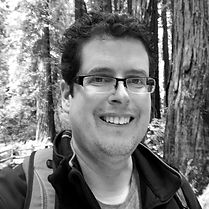
Funding Rural Journalism
Jim Pollock, Associated Press
Jim Pollock is Director of Major Accounts at The Associated Press, where he leads relations with large media organizations, as well as nonprofits and academic institutions. In recent years, Jim has worked to deepen the AP’s ties with nontraditional and independent publishers through collaboration with the Institute for Nonprofit News and LION Publishers. He has worked across digital and traditional media through his career. He previously held business and editorial roles at NBC News Digital, msnbc.com, Microsoft Encarta, and The Asahi Shimbun, New York Bureau. In 2013 he founded emdash media, a media consultancy.
Jim grew up in Salem and Portland, spending his summers in the mountains and on the coast. He currently lives in Kirkland, Washington with his wife, Myriam, where they enjoy frequent visits from their three daughters.
.png)
Erin Borla, Executive Director of Roundhouse Foundation
Erin Borla is an Oregonian—born and raised in Central Oregon and the granddaughter of Oregon’s own tough mother-Gert Boyle of Columbia Sportswear. For more than 20 years, she has worked with and for nonprofit organizations that support rural communities with innovative economic strategies. Her dedication to supporting rural spaces through listening, collaborating and open and honest sharing of ideas helps her elevate community partners through her work.
Legal Help Resources
Rebecca Morris, OPB VP & General Counsel
Rebecca Morris is a vice president and general counsel for OPB. In that role, she oversees all OPB legal matters and leads an in-house legal team that works across the organization to solve problems, assess and mitigate risks, facilitate transactions, assist with regulatory compliance, manage litigation and public records appeals, and develop sound policies and procedures. Prior to joining OPB in 2006, she served as assistant general counsel at Thirteen/WNET, New York City’s flagship public television station.

Joanna Perini-Abbott, Director of the Center for Advocacy at Lewis & Clark Law School
Jo Perini-Abbott is the Director of the Advocacy Center at Lewis & Clark Law School. In this role she teaches trial advocacy, pretrial advocacy, evidence, and ethics. Jo also works with various community partners on practical skills opportunities for law students such as this first-of-its-kind partnership between OPB and Lewis & Clark Law School. She is passionate about making law school practical so that graduates are ready for practice. She came to this role after nearly fifteen years as a trial attorney focused on federal criminal defense and high-stakes civil litigation involving trade secrets and noncompete agreement enforcement. While a practicing lawyer, Jo was also a member of the Oregon Board of Bar Examiners where she chaired the committee that revised attorney licensure in Oregon.
THANK YOU, ROUNDHOUSE FOUNDATION, FOR YOUR SUSTAINING SUPPORT OF RURAL COMMUNITIES
